


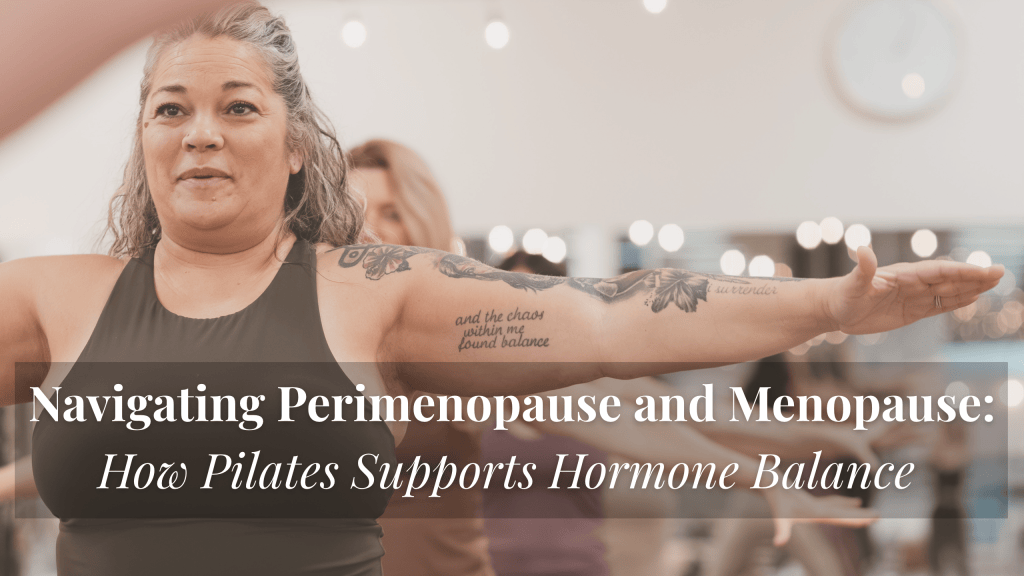
If you’ve hit your late 30s, 40s, or 50s and suddenly feel like your body is playing by a completely new set of rules, well yeah, it’s true. Hormones are shifting and your body is responding.
During perimenopause and menopause, fluctuating estrogen and progesterone levels trigger a cascade of shifts, from disrupted sleep, hot flashes, and joint stiffness to stubborn changes in body composition and energy levels. What worked for your body in your 20s and early 30s, like grueling high-intensity cardio or skipping rest days, can suddenly leave you feeling exhausted, inflamed, and frustrated.
But there’s good news! You don’t need to push your body harder to navigate hormonal shifts. You need to move smarter.
Low-impact, mindful practices like Pilates and barre offer a uniquely supportive approach to hormone balance, helping you build strength, protect your bones, and calm your nervous system during every stage of menopause.
1. Lowering Cortisol Without Sacrificing Strength
As estrogen declines, your body becomes much more sensitive to cortisol, your primary stress hormone. High-intensity workouts like heavy HIIT or long-distance running spike cortisol, which can worsen menopause symptoms like poor sleep, fatigue, and that stubborn, extra abdominal weight.
Pilates challenges your muscles deeply using controlled resistance and isometric holds without triggering a massive stress response. Combined with intentional, diaphragmatic breathwork, Pilates activates your parasympathetic (“rest and digest”) nervous system, helping lower baseline cortisol while still building muscular endurance. Instead of walking out of a workout feeling depleted, or puffy from inflammation, a Pilates session leaves your nervous system calm and your body feeling genuinely energized.
2. Protecting Bone Density and Joint Health
Estrogen plays a vital role in maintaining strong bones and lubricated joints. When estrogen drops, women face a higher risk of osteopenia, osteoporosis, and everyday joint aches.
Reformer Pilates and barre use spring resistance, body weight, and light hand weights to place safe, targeted load on your bones, stimulating bone-building cells without jarring high-impact movements. Plus, the focus on spinal articulation and controlled range of motion helps relieve stiffness in the hips, lower back, and shoulders. If waking up with achy hips or a stiff lower back has become your new normal, gentle spring resistance can help your joints feel cushioned, supported, and fluid again.
3. Preserving Lean Muscle
Hormonal shifts naturally accelerate age-related muscle loss, which slows down your resting metabolism.
Pilates and barre target both large muscle groups and the deep stabilizing muscles that support your posture and pelvic floor. Building and maintaining lean muscle helps improve insulin sensitivity, stabilize blood sugar, and keep your metabolism resilient, without leaving you depleted for the rest of the day. By rebuilding that deep, supportive strength, you’ll notice steadier energy throughout the afternoon and a stronger, more capable body in your everyday life.
4. Supporting Pelvic Floor Strength and Core Stability
Declining estrogen affects the elasticity and strength of pelvic floor tissues, which can lead to core weakness or bladder leaks during menopause.
Pilates helps in two ways: it physically strengthens your pelvic floor muscles and trains them to coordinate with your breath and deep core. Rather than aggressive crunches that push downward on your bladder, Pilates teaches your pelvic floor to gently lift and engage on the exhale so your muscles know how to automatically turn on and support you during everyday movements. That means you can cough, laugh, or lift groceries without worrying about unexpected leaks, feeling genuinely supported and confident in your pelvic floor.
5. Improving Sleep Quality and Mood Stability
Night sweats and hormonal fluctuations can turn a good night’s sleep into a distant memory. Mindful movement acts as a natural reset for your circadian rhythm and brain chemistry. By releasing physical tension, boosting circulation, and stimulating feel-good endorphins without overstimulating your nervous system, a regular Pilates practice helps promote deeper, more restorative sleep. Taking just one hour on the mat or reformer helps quiet a racing mind, melt away physical tension, and set you up for deeper rest tonight.
How to Tailor Your Studio Routine During Perimenopause & Menopause
- Prioritize Consistency Over Intensity: Aim for 2–4 classes a week where you leave feeling energized and grounded, rather than wiped out.
- Honor Your Energy Levels: Some days you’ll feel ready for heavier reformer springs or an extra barre pulse; other days, focusing on mobility, breath, and alignment is the exact medicine your hormones need.
- Never Skip Recovery: Rest days aren’t a sign of slacking, they are when your muscles repair and your hormones recalibrate.
Your Body Isn’t Broken, It’s Evolving
Perimenopause and menopause aren’t problems to “fix” or battles to fight against your own body. They are natural transitions that simply call for a more supportive, intelligent way of moving.
At Redlands Barre, our classes are designed to meet you exactly where you are today, helping you build strength, protect your joints, and feel strong, capable, and at home in your body through every season of life.
Want to learn more from home? Access Our On-Demand Hormone Workshop with Kristy Cranell, FDNP, and Ally Gillespie, NASM-CPT, to gain insight on hormone health along with practical ways to navigate your nutrition and workouts before, during, and after Menopause → The Midlife Shift: From Confused to Confident


Sources:
The Menopause Society: Too Much Exercise Could Actually Trigger a Hot Flash
The Menopause Society (MenoNote): Midlife Weight Gain & Healthy Lifestyle Choices (PDF)
PubMed: Effects of Pilates Training on Sleep Quality, Anxiety, Depression and Fatigue in Postmenopausal Women
PubMed: Effects of Pilates Exercises on Pain, Functional Status and Quality of Life in Women with Postmenopausal Osteoporosis
Journal of Bodywork and Movement Therapies: Effects of Pilates Exercise on Sleep Quality, Mood, and Physical Function in Postmenopausal Women