
Stress doesn’t always look dramatic. Sometimes it’s a racing mind at the end of a long day, a tight jaw, an unsettled stomach, or the frustrating feeling of being physically exhausted while your body still seems unable to switch off. These are all signs that your body is still in a state of heightened alert, even when the stressful moment has passed. One of the key pathways involved in helping your body shift back toward rest is the vagus nerve.
So, what exactly is the vagus nerve, and what role does it play in helping your body regulate stress? The good news is that supporting your body’s natural ability to move toward a calmer state doesn’t have to be complicated. There are several simple practices you can incorporate into your day, and most require little more than a few minutes of your time.
First, What Exactly Is the Vagus Nerve?
The vagus nerve is one of the body’s major communication pathways, connecting the brain with organs throughout the chest and abdomen, including the heart, lungs and digestive system. It carries information in both directions, allowing the brain to monitor what’s happening inside the body while also helping regulate important functions such as heart rate, breathing and digestion.
The vagus nerve is also a key part of the parasympathetic nervous system, which helps the body shift into a state of rest, recovery and digestion. When you’re relaxed, vagal activity can help slow your heart rate and support this calmer state. Following a stressful experience, the parasympathetic nervous system helps bring the body out of that heightened state and gradually back toward its normal baseline.
Does Stress Mean Your Vagus Nerve Isn’t Working Properly?
Not necessarily. Feeling stressed, having trouble sleeping or feeling anxious before an important event does not mean your vagus nerve is damaged. Your nervous system is designed to respond to stress, the problem is often that modern life can give it very few opportunities to return to a calm baseline. That leads to chronic stress, which can cause a range of diseases and health problems. For everyday tension, simple practices that encourage slower breathing, gentle movement, relaxation and sensory input can give your nervous system more opportunities to shift out of a heightened state and back into relaxation mode.
5 Vagus Nerve Techniques You Can Try at Home
1. Slow Your Breathing
If you want one simple place to start, focus on your breathing.
Try a pattern of inhaling for four seconds and exhaling for six. Continue for a few minutes, keeping the breaths comfortable rather than forcing them to be deep. The longer exhale is not a magic formula, but deliberately slowing your breathing can influence the autonomic nervous system and may help reduce a rapid heart rate and the physical intensity of the stress response.
You can do this almost anywhere: at your desk, before an appointment, after a difficult conversation or while lying in bed. The goal isn’t to take the biggest breath possible. It’s simply to slow things down.
2. Get Your Body Moving
Movement is another practical way to support nervous-system regulation. You don’t need an intense workout. A walk, a bike ride, a swim or a gentle exercise class can all get you moving while giving your body a different set of sensory signals to process.
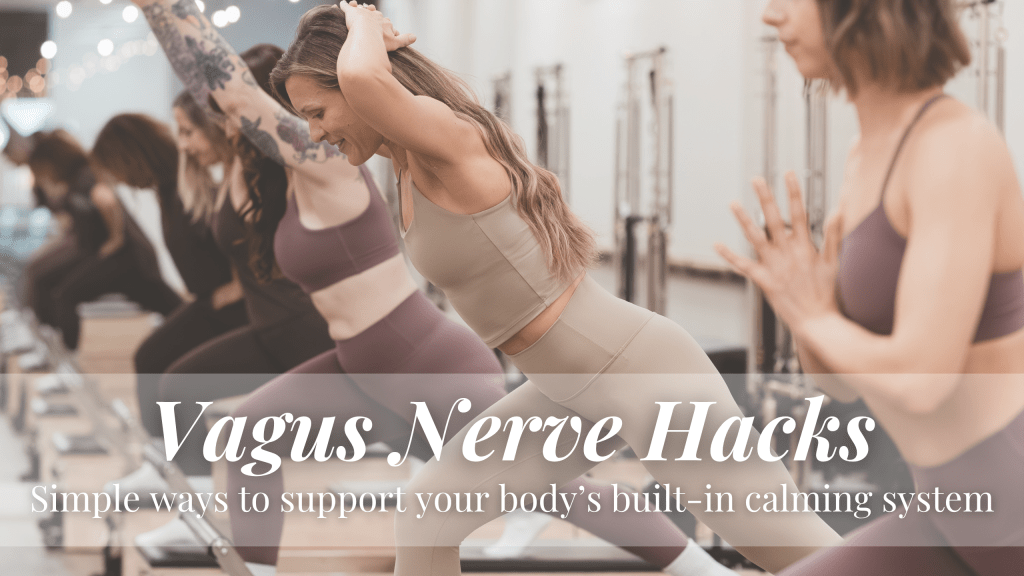
This is one reason activities such as Pilates and barre can be particularly appealing. They combine movement with breathing, balance, concentration and body awareness, encouraging you to pay attention to what your body is doing rather than remaining caught up in your thoughts.
And sometimes the simplest option is the most realistic, like taking a little walk. You don’t need to turn it into a workout. Just change your environment, move your body and give yourself a few uninterrupted minutes away from whatever has been keeping you switched on.
3. Experiment With Cold Water
Cold exposure has become popular in the wellness world, but you don’t need an elaborate ice bath to try it. A brief exposure to cool or cold water can produce a noticeable physiological response, including changes in heart rate and blood vessel activity. Some people find this helps them feel more alert and grounded afterward.
If you’re curious about trying it, keep it simple:
- Splash cool water on your face.
- Finish a shower with a brief period of cooler water.
- Use a cool compress on your face or neck.
There is no prize for making yourself uncomfortable. Start gently, pay attention to how your body responds and stop if you feel dizzy, unwell or overwhelmed.
4. Hum, Sing or Use Your Voice
Your vagus nerve has connections in areas of the throat and neck, which is one reason vocal activities such as humming and singing are often discussed in relation to vagal stimulation.
Try humming while you make breakfast. Sing along to a song in the car. Spend a few minutes chanting or practicing slow vocal sounds. Don’t worry, it doesn’t have to sound good, that’s not the point. The value may simply come from slowing down, focusing on your breathing and engaging with sound in a way that feels calming.
5. Try a Gentle Foot Massage
Sometimes supporting your nervous system can be as simple as slowing down long enough to notice your body. A few minutes of gentle massage can be a relaxing addition to your evening, and you can easily do it yourself.
While sitting on the couch, try:
Rotating your ankle slowly.
Massaging the arch of your foot with your thumbs.
Gently stretching each toe.
There is no need for a complicated technique. Think of it as a few minutes of intentional touch and body awareness at the end of the day.
What Can These Practices Actually Do?
There isn’t one single technique that can “reset” your nervous system or solve chronic stress overnight. The vagus nerve is part of a much larger, highly complex system that regulates countless processes throughout the body. What these practices can do is create small opportunities for your body to move toward a calmer state. Depending on the person and the practice, that may mean:
Supporting a Calmer Stress Response
Slow breathing, gentle movement and other relaxation practices can help reduce some of the physical sensations associated with stress and encourage a shift toward a more relaxed state.
Supporting Cardiovascular Regulation
The vagus nerve is involved in regulating heart rate and other cardiovascular functions. Practices that influence the autonomic nervous system may therefore affect heart rate and blood pressure.
Supporting Digestion
The vagus nerve communicates extensively with the digestive system and is involved in several aspects of gastrointestinal function. This connection is one reason stress and digestion are so closely linked.
Creating Better Sleep Conditions
These techniques aren’t a cure for insomnia, but incorporating calming practices into an evening routine may help create the conditions for winding down before bed.
Building Greater Body Awareness
Perhaps the simplest benefit is also one of the most useful: learning to notice when your body is tense and having a few reliable ways to respond.
Your Nervous System Doesn’t Need Another Task to Do
Wellness advice can make relaxation feel like another task on an already overflowing to-do list. You don’t need a perfect morning routine, ice bath or a meditation app to start seeing results. Sometimes supporting your nervous system looks much simpler. Take a slow breath, go for a short walk, put down your phone, hum along to a song or give yourself five quiet minutes before bed. The goal isn’t to force your body into a state of calm, it’s to give it regular opportunities to get there naturally. Taking care of your nervous system doesn’t have to mean doing more. In fact, adding another task to an already busy day can sometimes have the opposite effect. Sometimes, the most supportive thing you can do is simply give yourself permission to slow down.
Sources
Cleveland Clinic. Vagus Nerve: What It Is, Function, Location & Conditions.
Read the Cleveland Clinic overview
Cleveland Clinic. How To Reset Your Vagus Nerve Naturally.
Read the Cleveland Clinic guide

