
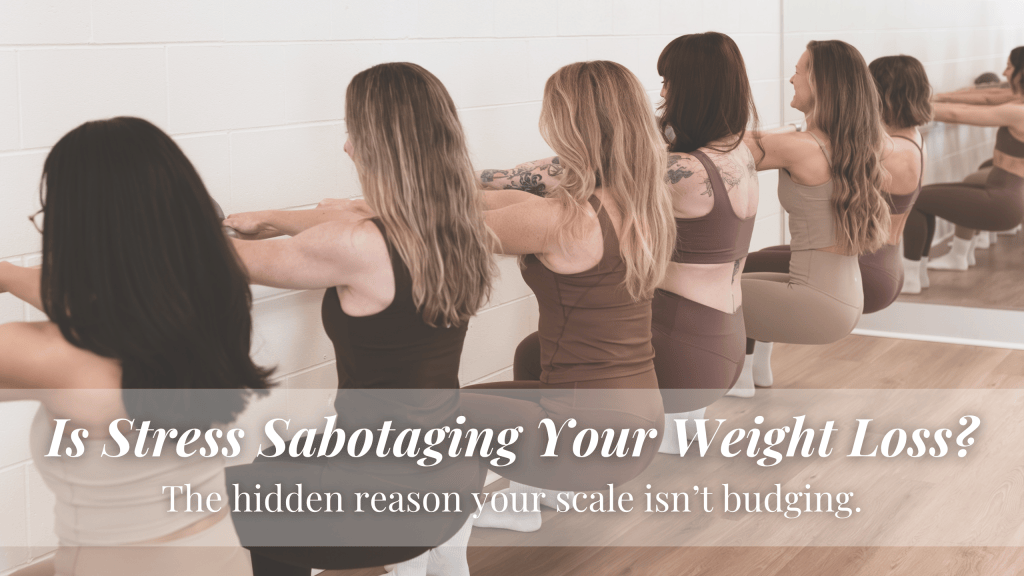
Do you feel like you’re doing everything “right,” exercising hard, eating your greens, maybe even reducing your calorie intake, yet the scale won’t budge, or you feel constantly bloated and tired? Most people think exercise and diet are all you need to think about when trying to lose weight… well, think again. It could actually be stress inhibiting your weight loss ambitions.
When life gets chaotic, your body produces a survival hormone called cortisol. While cortisol is essential for keeping us alive, chronic stress triggers a domino effect throughout your entire body which disrupts your sleep, your gut, your diet, and your energy, creating a severe barrier to weight loss and recovery.
Let’s talk about how stress impacts your body, and some things we can do to help reset your system.
Appetite, Comfort Foods & Belly Fat
When you experience ongoing stress, whether from a demanding job, busy schedule, or emotional overload, your adrenal glands flood your system with cortisol. Cortisol actively stimulates your appetite, signaling to your brain that you need quick energy to handle a threat.
Because stress brings negative emotions, most people naturally reach for “comfort foods,” items packed with sugar, simple carbs, and saturated fats that trigger a temporary dopamine hit. Think: reaching for those Oreos in the pantry instead of the apple in the fridge… To make matters worse, cortisol directly promotes fat deposition, specifically encouraging the body to store visceral fat around the abdominal region (the most unhealthy kind associated with disease).
Disrupted Sleep & Inactivity
Stress rarely stays in its own lane; it bleeds into your daily habits in ways that stall your progress:
- The Sleep-Weight Disruption: High stress ruins sleep quality, making it hard to fall or stay asleep. Lack of sleep disrupts two crucial metabolic hormones: it spikes ghrelin (the hormone that tells you you’re hungry) and suppresses leptin (the hormone that tells you you’re full). Short, poor-quality sleep is heavily associated with higher body weight and increased risk of obesity.
- The Sedentary Trap: Chronic stress drains your mental energy, causing most people to become far more sedentary throughout the day. You might sit longer at your desk, skip daily walks, or collapse onto the couch in the evening because your brain feels fried, this in turn drastically lowers your total daily calorie burn.
The Gut-Brain Axis Connection
Stress doesn’t just affect your brain; it directly alters your gut microbiome. Chronic stress reduces the diversity of your beneficial gut bacteria and weakens the gut lining. Because your gut produces a massive portion of your neurotransmitters (like serotonin), an unhealthy gut directly impacts how you feel, your mood stability, and even your food cravings (hence leading to the things mentioned above like poor food choices and becoming more sedentary and less motivated due to mood changes).
Why Intense Cardio Isn’t Always the Fix
When weight stalls, the instinct is often to push harder with high-intensity interval training (HIIT) or grueling cardio. However, if your body is already overwhelmed by life stress, adding extreme physical stress acts as fuel to the cortisol fire. Your brain registers both physical strain and emotional strain as threat responses. Pushing through exhaustion can keep your body locked in “fight-or-flight” mode, further driving up inflammation, water retention, and fatigue. You think you’re doing your body a service and kicking that extra weight to the curb, but really you might actually be doing the opposite.
How Pilates and Barre Lower Cortisol & Reset Your System
This is where low-impact, mindful movement changes the game. Pilates and barre provide a unique combination of strength building, core stability, and nervous system regulation:
- Shifting to “Rest and Digest”: Pilates heavily emphasizes deep, diaphragmatic breathing. Conscious breathwork stimulates the vagus nerve, signaling to your brain that you are safe and transitioning your nervous system from “fight-or-flight” (sympathetic) to “rest and digest” (parasympathetic).
- Building Lean Muscle Without Spiking Stress: Barre and Pilates utilize small, isometric movements and eccentric contractions to build lean muscle mass. Muscle increases your resting metabolic rate, helping you burn energy naturally, all without sending your stress hormones through the roof.
- Improving Sleep & Mobility: By releasing physical tension and balancing stress hormones, low-impact studio classes prepare your body for deeper, restorative sleep, setting off a positive cycle of hormonal balance and mental clarity.
What You Can Do About It: 3 Steps to Reset
- Trade High-Stress Cardio for Mindful Movement: Try swapping any high-intensity workouts for a Pilates or barre class to give your nervous system space to regulate.
- Focus on the Breath: Pay attention to your breathing during class and when you’re feeling stressed throughout your day. Inhale deeply through the nose to expand the ribs, and exhale fully through the mouth to trigger immediate nervous system calm.
- Protect Your Sleep Hygiene: Unplug from screens 60 minutes before bed and establish a calming evening wind-down routine to lower nighttime cortisol and allow your body to repair.
The scale rarely tells the whole story. By prioritizing your nervous system, creating an environment where your body feels safe enough to let go of stress and restore balance, you can unlock your ability to thrive.
Ready to trade high stress for high energy? Join us in the studio this week, take a deep breath, and let’s move with intention.
Source:
PubMed: Stress and Obesity

