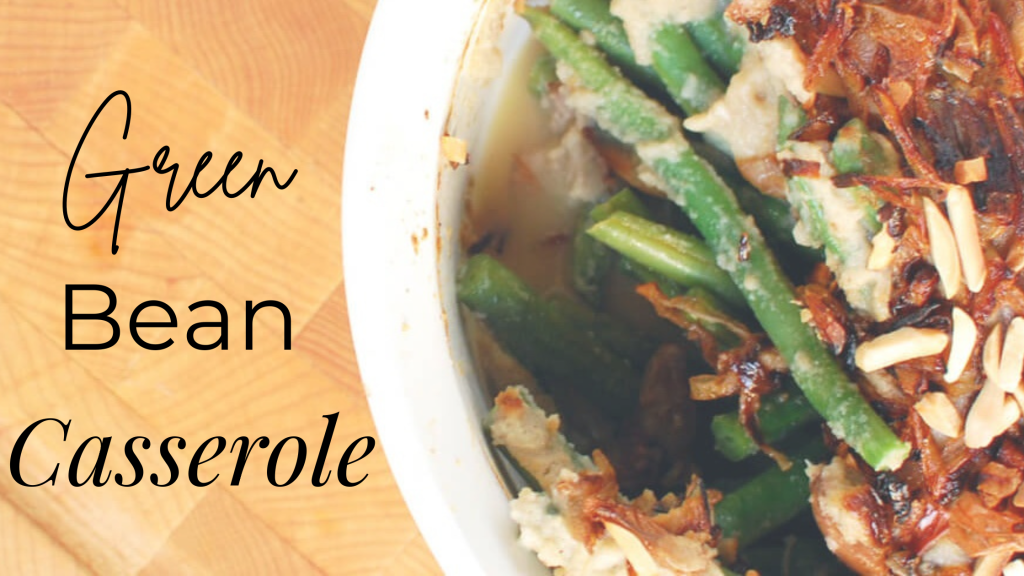
We’ve got a healthy swap for a Thanksgiving classic, Green Bean Casserole. The traditional casserole is loaded with extra calories from the creamy mushroom soup, fried onions, milk or cream, and some recipes even include cheese. This recipe is a whole new spin with the same delicious flavor, you’ll be pleasantly surprised just how similar it tastes, all the while cutting back on the calories! The ingredients consist of healthy whole foods, providing you with a variety of vitamins and nutrients. What’s not to love? Give it a try this Thanksgiving or holiday season!
Green Bean Casserole Ingredients:
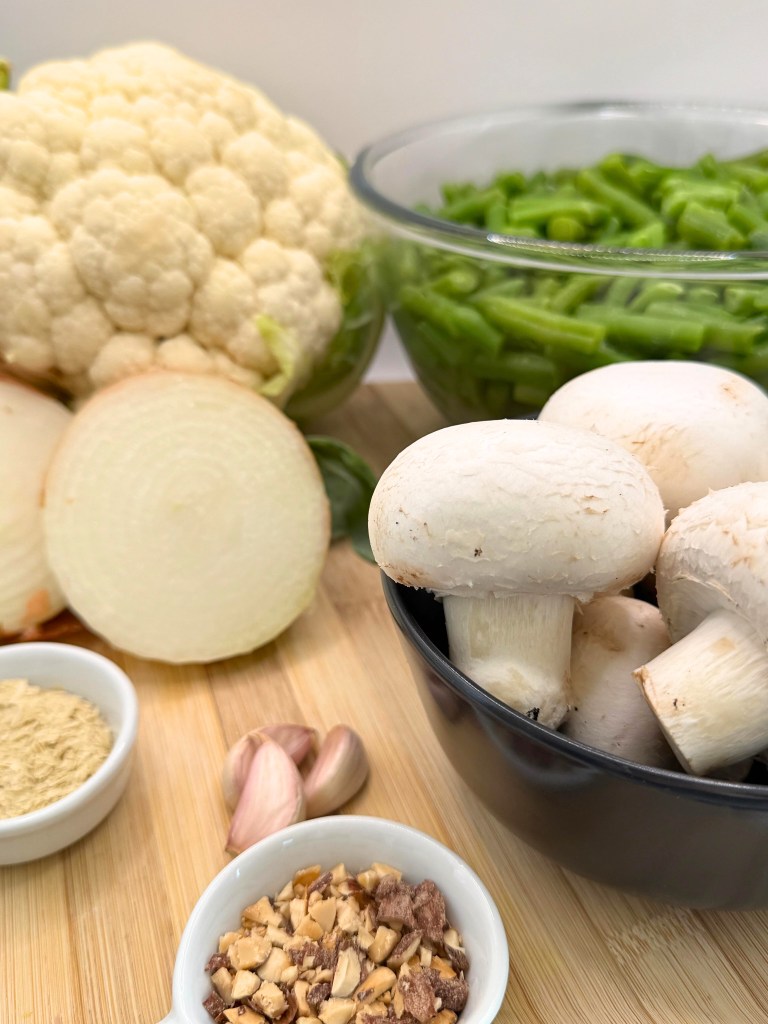
Coconut Oil- This oil adds a hint of tropical flavor while also offering health benefits. Packed with medium-chain fats, it’s a quick source of energy and a heart-friendly alternative to heavier cooking oils. Its heat stability makes it ideal for sautéing like we do in this recipe. If you don’t have coconut oil on hand, it can easily be substituted with extra virgin olive oil.
French Shallot- We use French shallots for their refined, mild flavor that enhances dishes without overpowering them. Beyond taste, they contain vitamins and phytonutrients that may help reduce inflammation, support cardiovascular health, and boost immunity. Their versatility makes them ideal for both cooked and raw preparations.
Cauliflower- This vegetable has a mild flavor and is ideal in substitution recipes. It’s packed with fiber, vitamin C, and antioxidants, which support digestion, immunity, and overall health, making it a nutritious alternative to heavier ingredients.
Green Beans- The star of the show! Green beans add a crisp, fresh bite to any dish. Low in calories but high in fiber and phytonutrients, they promote digestive health and overall vitality.
Mushrooms- These bring a rich, savory umami flavor to any dish. Low in calories but nutrient-dense, they provide fiber, vitamins, and compounds that may help boost immune function and heart health.
Garlic- We use garlic for its unmistakable taste and ability to enhance every recipe. Beyond flavor, it contains nutrients and natural compounds that may help reduce inflammation and support a healthy immune system.
Water- We use water as a low calorie way of making the blended cauliflower more creamy.
Nutritional Yeast- This natural substitute for cheese is a nutritious way to add B vitamins and protein to your diet, making it a great addition to this green bean casserole.
Slivered Almonds- These nuts add a satisfying crunch and nutty flavor to any dish. They’re rich in healthy fats, protein, fiber, and vitamin E, promoting heart health, satiety and sustained energy.
Ingredients:
- 2 tbsps Coconut Oil (divided)
- 1 1/2 cups French Shallot (thinly sliced)
- 1/2 head Cauliflower (chopped into florets)
- 5 cups Green Beans (trimmed and halved)
- 2 cups Mushrooms (sliced)
- 3 Garlic (cloves, minced)
- 1 1/2 cups Water
- 1 tsp Sea Salt
- 2 tbsps Nutritional Yeast
- 1/4 cup Slivered Almonds (toasted)
Directions:
- Add half of the coconut oil in a large skillet and place over medium-low heat. Add the sliced shallots. Stir often to prevent burning for 30 to 40 minutes, or until caramelized. Once the onions are golden, remove from the heat, transfer into a bowl, and set aside.
- While the onions cook, steam the cauliflower in a steaming basket until softened and are easily pierced with a fork. Transfer to your blender or food processor and set aside.
- Steam the green beans for 6 to 8 minutes or until bright green. Transfer the beans into a casserole dish.
- Heat the remaining coconut oil in a skillet over medium-low heat. Saute mushrooms for 5 minutes or until softened then add in the garlic. Saute for another minute and remove from heat. Spread half of this mushroom mixture over your green beans in the casserole dish. Add the remaining half to your blender with your steamed cauliflower.
- Preheat the oven to 350ºF (177ºC). Add water, sea salt, and nutritional yeast to the blender. Blend until very smooth.
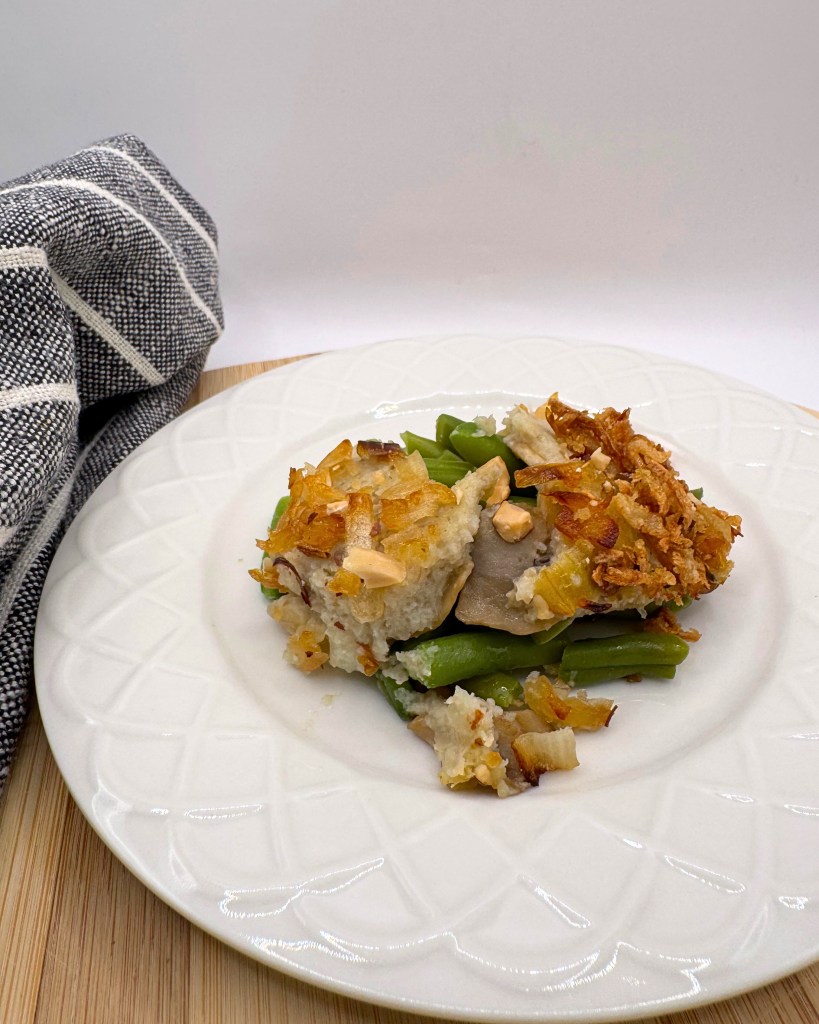
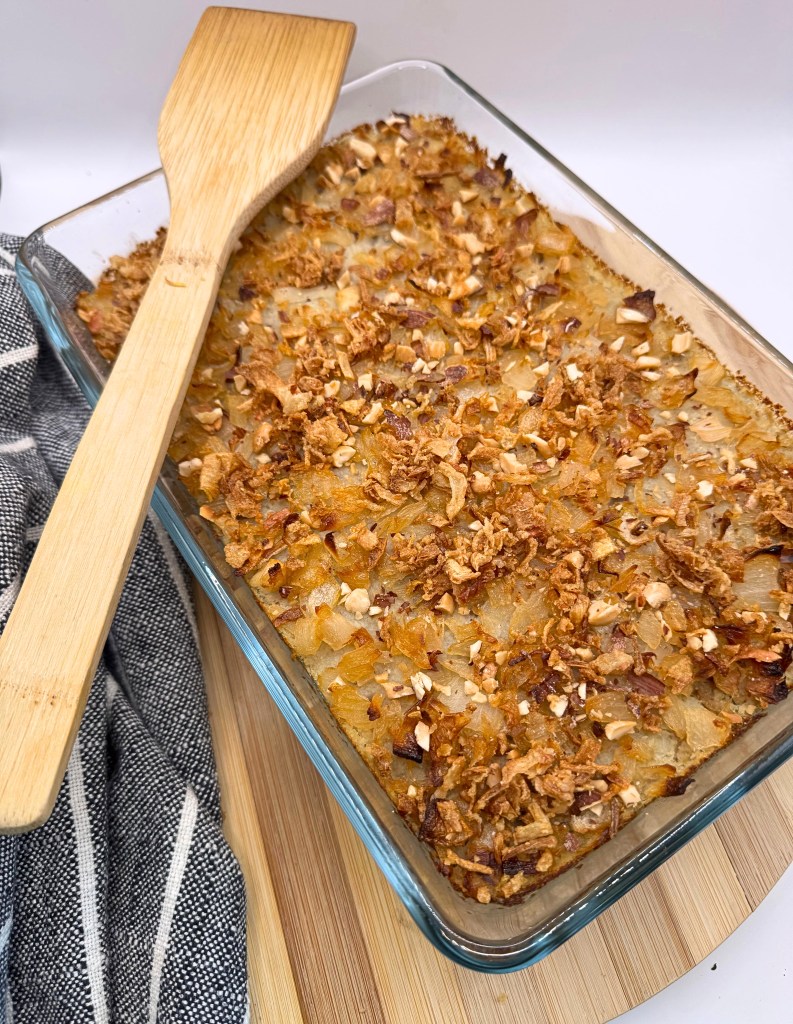
- Pour desired amount of creamy cauliflower sauce into your casserole dish over the green beans and mushrooms. You might not need it all. Smooth with a spoon or spatula. Top with the caramelized onions.
- Bake the casserole for 30 minutes. Remove from the oven and let sit for 5 minutes before serving. Garnish with toasted slivered almonds and enjoy!
Notes:
- Leftovers- Refrigerate in an airtight container for up to four days.
Health Insights:
- Heart Health- The recipe is rich in monounsaturated fats from coconut oil and almonds, which are known to support heart health by helping to lower bad cholesterol levels. The green beans and mushrooms provide dietary fiber, which also contributes to heart health by promoting healthy cholesterol levels and improving overall cardiovascular health.
- Immune System- The high content of vitamins A and C from the cauliflower, green beans, and mushrooms in this recipe contribute to a strong immune system. These vitamins are essential for the body’s natural defense against disease and infection. Additionally, the garlic in the recipe has been known for its immune-boosting properties.
- Bone Health- This recipe is a good source of calcium and vitamin K, both of which are essential for bone health. The almonds and green beans provide calcium, which is necessary for the development and maintenance of strong bones. Vitamin K, found in green beans and cauliflower, is important for bone health as it helps with calcium absorption and bone mineralization.